Table of Contents
-
How Does CSR Contribute to Environmental Sustainability?
-
How to Demonstrate Commitment to Sustainability?
-
What Are Examples of Environmental CSR Activities?
-
What Is Commitment to Environmental Sustainability?
-
How Are You Demonstrating Your Commitment to Sustainability?
How Does CSR Contribute to Environmental Sustainability?
Corporate Social Responsibility, or CSR, is how businesses take responsibility for their impact on the world. When it comes to the environment, CSR means companies actively working to reduce pollution, protect natural resources, and support solutions that heal the planet. But here is the important part: CSR only matters when it leads to real, measurable action.
When a company embraces environmental CSR, it does things like lowering carbon emissions, reducing waste, supporting recycling, and protecting ecosystems. These actions directly help fight climate change, keep oceans clean, and preserve wildlife for future generations.
For Ocean Sole, CSR takes on a very concrete form. When a business partners with us, their contribution is not abstract. Every dollar helps collect discarded flip-flops from Kenya's beaches, transforms them into vibrant sculptures, and provides fair wages for local artisans. The environmental outcome is clear: less plastic in the ocean, cleaner coastlines, and thriving communities.

Every bottle, every bag, every flip‑flop collected and ready to be transformed. This is the result of purpose‑driven partnership.
How to Demonstrate Commitment to Sustainability?
Demonstrating a real commitment to sustainability means moving beyond words. It means setting clear, measurable goals and then sharing honest progress. Stakeholders today can easily spot the difference between genuine effort and what is often called "greenwashing."
Here are practical ways businesses can show they truly care:
Set Specific, Measurable Targets
Instead of saying "we want to be more sustainable," successful companies set goals like "reduce emissions by 40% by 2026" or "divert 50% of waste from landfills this year". These clear targets make it possible to track progress and hold the company accountable.
Integrate Sustainability into Daily Operations
CSR should not be a separate department. It should be part of everyday decisions. This means training employees, updating procurement policies, and ensuring that sustainability is considered in every project.
Be Transparent About Progress and Challenges
Honest reporting builds trust. Companies should share not only their successes but also the obstacles they face. This transparency shows that sustainability is taken seriously as a long-term journey, not just a marketing campaign.
Engage Employees and Communities
Sustainability is a team effort. Companies that involve their employees in beach cleanups, tree planting, or educational workshops create a culture of environmental responsibility from within
What Are Examples of Environmental CSR Activities?
Environmental CSR activities come in many shapes and sizes. The best ones are practical, visible, and involve real people doing real work. Here are examples that anyone from a small business owner to a CSR manager can consider.
Partner with a Social Enterprise for Waste Collection:
Instead of just talking about plastic pollution, a company can set up collection points where employees or customers drop off specific types of waste like flip‑flops, bottles, or electronics. That waste then gets transformed into something useful or beautiful. Ocean Sole works with businesses that collect flip‑flops at their locations, turning a problem into art and jobs.
Organize a Beach or River Cleanup:
Nothing builds team spirit like getting hands dirty for a good cause. Companies can sponsor a cleanup day where employees volunteer to remove trash from a local beach, riverbank, or park. It is simple, measurable, and leaves a visible impact. Plus, employees return to work feeling proud and connected.
Switch to Upcycled or Recycled Products for Daily Operations:
A business can replace single‑use plastic cups, takeaway containers, or office supplies with products made from recycled materials. Even better, they can use upcycled art like Ocean Sole sculptures for office decoration or client gifts. Every purchase sends a message that waste has value.

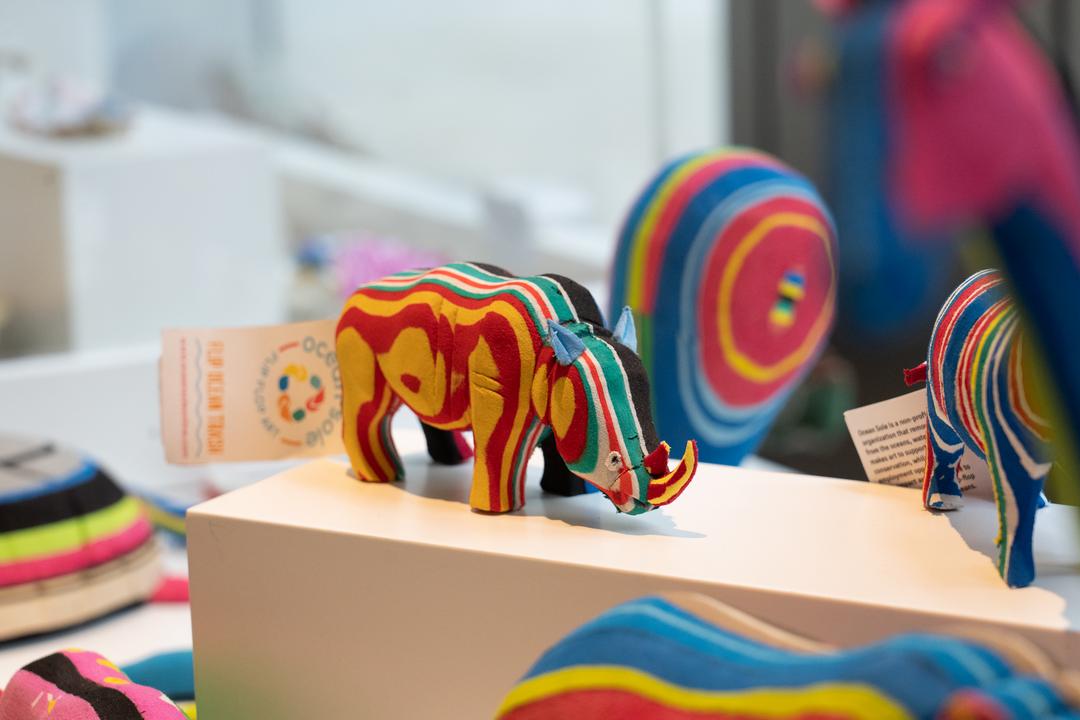
Colourful, hand‑carved, and kind to the planet. The perfect statement piece for any space that cares.
Start a Composting Program
Food waste is a huge problem. Offices, hotels, and restaurants can start composting their organic waste instead of sending it to landfills. The compost can be used in company gardens or donated to local farms. It reduces methane emissions and builds healthier soil.
Host Educational Workshops for Employees and Community
Knowledge leads to action. A company can bring in experts to teach employees about recycling, upcycling, or ocean conservation. Ocean Sole offers workshops where participants learn how flip‑flops become art and why small actions matter. These sessions turn passive awareness into active engagement.

Behind every sculpture, there is a maker. Behind every maker, there is a skill learned and shared. Come see for yourself.
Replace Plastic Giveaways with Useful, Eco‑Friendly Items
Many companies hand out plastic pens, bags, or water bottles at events. These often end up in the trash. Instead, choose giveaways made from recycled materials like Ocean Sole keychains, notebooks from recycled paper, or reusable metal straws. Every small swap reduces waste.
The key is to start somewhere. Even one small action, done consistently, can grow into a lasting commitment. And when many businesses do the same, the collective impact is enormous.
What Is Commitment to Environmental Sustainability?
Commitment to environmental sustainability means making a promise to protect the planet and then backing that promise with consistent, verifiable action. It is not a one-time campaign or a seasonal initiative. It is an ongoing responsibility woven into the fabric of how an organization operates.
At its heart, true commitment rests on three foundations:
Long-Term Vision
A committed company thinks beyond the next quarter or the next fiscal year. It sets goals for 2030, 2040, and beyond. It understands that environmental challenges like climate change and plastic pollution will not be solved overnight.
Willingness to Invest
Real commitment requires resources. It means dedicating budget, staff time, and leadership attention to sustainability projects. It may mean choosing more expensive but more sustainable materials, or investing in partnerships that deliver long-term environmental benefits.
Acceptance of Accountability
A committed company invites scrutiny. It publishes sustainability reports, undergoes third-party audits, and welcomes feedback from stakeholders. It does not hide from criticism but uses it to improve.
For Ocean Sole, commitment looks like 15 years of consistent work on Kenya's beaches. It looks like partnerships with companies such as Rubis. It looks like transforming over 19,000 flip-flops every week into art that sparks global conversations about ocean conservation.
How Are You Demonstrating Your Commitment to Sustainability?
This is the question every business leader should ask themselves today. In 2026, stakeholders are no longer satisfied with good intentions. They want to see the receipts.
Here are a few ways you can assess and improve your own commitment:
Audit Your Supply Chain
Where do your materials come from? Are your suppliers committed to ethical and environmental standards? Understanding your supply chain is the first step toward meaningful change.
Set Science-Based Targets
Work with experts to set emissions reduction targets that align with climate science. Then, track your progress publicly.
Support Regenerative Solutions
Move beyond "less harm" to "active good." This means investing in projects that restore ecosystems, remove pollution, and build community resilience. Partnering with organizations like Ocean Sole is one powerful way to do this.
Measure What Matters
Establish key performance indicators for your environmental impact. Track waste diversion rates, carbon emissions, water usage, and community benefits. Use data to drive decisions.
Tell Your Story Honestly
Share your journey. Celebrate your wins, but also acknowledge your challenges. Authentic storytelling builds trust and inspires others to join the movement.
How Are You Demonstrating Your Commitment to Sustainability? (Two Ways, with Ocean Sole)
Support Regenerative Solutions
Moving beyond "less harm" to "active good" is the heart of true sustainability. Instead of just reducing waste, regenerative solutions restore what has been damaged. For a company, this means investing in projects that clean up pollution, restore ecosystems, and build community resilience.
How Ocean Sole helps: When a business partners with Ocean Sole, every sculpture purchased directly removes plastic from Kenya's coastlines. That plastic is then transformed into art, and the revenue funds further beach cleanups, mangrove planting, and fair‑trade employment for local artisans. The result is not just less pollution, it is restored beaches, healthier marine life, and stronger communities. This is regeneration in action.
Tell Your Story Honestly
Authentic storytelling builds trust. Instead of hiding challenges or exaggerating successes, honest companies share their journey including the struggles. This transparency shows stakeholders that sustainability is a real priority, not just a marketing campaign.
How Ocean Sole helps: When a company chooses Ocean Sole sculptures for their office, lobby, or corporate gifts, they receive more than a beautiful object. Each piece comes with a story: how many flip‑flops were diverted, which beach was cleaned, and which artisan carved it. Companies can share this story with employees, customers, and investors. It becomes a tangible, honest proof point that turns a vague commitment into a visible, memorable action.

From beach waste to larger than art. These animals stand tall, proving that sustainability can be bold and beautiful.
Audit Your Supply Chain and Choose Ethical Partners
Understanding where your materials and products come from is the first step toward meaningful change. A company that truly cares about sustainability looks beyond its own operations and asks hard questions: Are our suppliers paying fair wages? Are they using recycled or low-impact materials? Are they contributing to pollution or helping to solve it?
How Ocean Sole helps: Ocean Sole offers businesses a fully traceable, ethical supply chain for unique art pieces and corporate gifts. Every sculpture is made from flip‑flops collected from Kenya's beaches and waterways. Every artisan earns fair wages and works in safe conditions. When a company chooses Ocean Sole, they are not just buying a product they are choosing a supply chain that is transparent, responsible, and regenerative.
Measure What Matters and Set Tangible Goals
How Ocean Sole helps: Ocean Sole works with corporate partners to define specific, measurable environmental outcomes. A company might sponsor a certain number of beach cleanups, fund the collection of a target weight of flip‑flops, or commission a sculpture that directly represents a quantifiable amount of waste diverted. Ocean Sole provides impact reports that show exactly what was achieved so businesses can share real numbers with their stakeholders, not just good intentions.
Ready to turn your CSR commitments into measurable environmental action? Partner with Ocean Sole to clean oceans, support artisans, and create art that tells your sustainability story.
Explore Partnership Opportunities →