Table of Contents
-
How Art Reflects Our Shared Human Experience
-
Beyond Trash: Real-World Examples of Upcycled Art
-
The Tangible Benefits of Upcycling Beyond Aesthetics
-
How Art Weaves Our Collective Human Stories
-
The Power of Art to Raise Awareness & Drive Action
How Art Reflects Our Shared Human Experience
Art has always been humanity's mirror. It reflects our joys, struggles, values, and the evolving relationship we have with our planet. In an era defined by climate anxiety and disposable culture, upcycled art offers a new reflection: one of resilience, ingenuity, and hope. It mirrors the collective human experience of confronting our waste and choosing creativity over consumption.
For Ocean Sole, this reflection is literal. The vibrant colors of a recycled flip-flop art giraffe don't just represent the animal; they reflect the human activity on Kenyan beaches, the lost footwear of tourists, fishers, and families, now given new meaning. When a brand places such a piece in its lobby, it’s not just decorating; it's holding up a mirror that says, "We see the problem, and we are part of a beautiful, human-centered solution."

XL giraffe flip-flop sculpture. New colorways on their way!
As philosopher and author Alain de Botton writes in Art as Therapy: “Art is a way of preserving experiences, of which there are many transient and beautiful examples, and that we need help containing."
This is the power brands are tapping into: art that reflects a conscious human experience of responsibility, transformation, and connection.
Beyond Trash: Real-World Examples of Upcycled Art
Upcycled art takes countless forms globally, from jewelry made from circuit boards to furniture crafted from reclaimed wood. But for brands seeking a story with deep environmental and social impact, few examples are as compelling as Ocean Sole's work. Here are tangible examples that brands are integrating:
1. Large-Scale Public Installations: Brands sponsor monumental recycled plastic sculptures of endangered species for corporate campuses or public parks, creating iconic landmarks that spark daily conversation.
2. Custom Branded Collections: Companies commission bespoke pieces using their own post-consumer or post-industrial waste, creating a closed-loop story. Imagine a tech company's discarded cables or a hotel's old linens transformed into art.

Collaboration with STAWI, our flip-flop off cuts are used to make this colorful, fashionable, striking pieces! And they are made from 100% upcycled materials. Find them in our Karen Village Store.
3. Employee Engagement Artworks: Teams participate in workshops to co-create a sculpture from collected office or community waste, fostering teamwork and embedding sustainability into corporate culture.
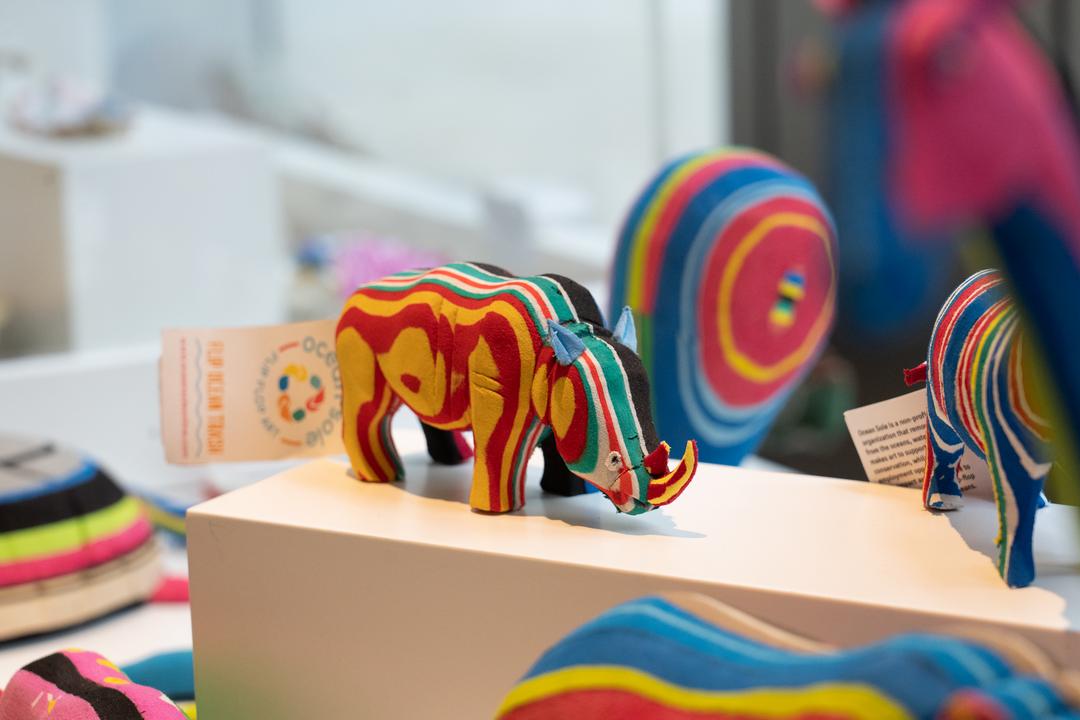
4. Ocean Sole’s Signature Model: The quintessential example. Flip-flops collected from Kenyan beaches are cleaned, sorted by color, and hand-carved into ethical home décor and animal sculptures. Each piece is a standalone example of marine plastic upcycling.
The Tangible Benefits of Upcycling Beyond Aesthetics
Choosing upcycled art is more than an aesthetic decision; it's a strategic investment with multi-layered returns. The benefits extend far beyond the visual appeal:
1. Social Value Creation: True upcycling supports the circular economy by valuing waste-picker communities and artisans. Ocean Sole, for instance, provides stable livelihoods for over Kenyan artisans, transforming environmental action into social equity.
2. Enhanced Brand Narrative: In a crowded market, a powerful story differentiates. Upcycled art provides a visually stunning, emotionally resonant chapter in a brand's sustainability story.
3. Catalyst for Internal Culture: Installing upcycled art in offices serves as a constant reminder of company values, boosting employee pride and attracting talent who prioritize purpose. It turns the workplace into a gallery of missions.
For Ocean Sole's partners, these benefits converge. The art becomes an asset that appreciates in narrative value, constantly communicating the brand's commitment to ocean conservation art, ethical sourcing, and meaningful innovation.

Ocean Sole's upcycled flip-flop art, demonstrating how sustainable design enhances brand storytelling and space. Our 4.5m giraffe for Rubis Kenya, where partnerships come together for impact.
How Art Weaves Our Collective Human Stories
At its core, art is storytelling. A handmade African gift from Ocean Sole tells a layered human story: the tourist who lost a flip-flop, the community member who collected it, the artisan who saw potential in the debris, and the brand that championed the process. This narrative arc from waste to wonder is a profoundly human story of redemption and hope.
When a brand uses upcycled art, it’s not buying a product; it’s adopting a story and weaving it into its own identity. It says, "Our story includes respect for artisans, care for our oceans, and faith in human creativity to solve problems." This is why Ocean Sole’s pieces resonate so deeply: each sculpture is a physical archive of human activity and transformation, making a brand’s sustainability pledge personal and palpable.
The Power of Art to Raise Awareness and Drive Action
Awareness is the first step toward change, but statistics alone rarely change behavior. Art bypasses intellectual resistance and speaks directly to the heart. A beautiful sea turtle sculpture made from flip-flops does what a graph about marine plastic cannot: it creates an immediate, emotional connection between the viewer and the issue.
How Ocean Sole Uses Art to Raise Awareness:
-
Creating Cognitive Dissonance: The beauty of the art clashes with the knowledge of its origin (trash), forcing a reevaluation of what we consider "waste."
-
Serving as an Educational Proxy: Sculptures in airports, or offices become tools for educators and leaders to discuss marine conservation Kenya, circular design, and social entrepreneurship.
-
Inspiring Tangible Action: The art answers the "what can I do?" question. It models a solution (upcycling) and provides a direct pathway for involvement, whether through purchase, collaboration, or support.
For brands, this awareness-raising power is invaluable. By aligning with Ocean Sole, a company positions itself not just as a voice raising an alarm, but as a patron of the solution. It moves the conversation from problem to possibility, empowering its audience and driving collective action through inspiration, not guilt.
Ready to support the purpose join here: transforming waste into impact