Table of Contents
-
What Is Flip‑Flop Art?
-
How Are Flip‑Flops Turned into Art?
-
What Tools Are Used to Create the Products?
-
Why Does Owning Reclaimed Art Matter for the Planet?
-
What Impact Does This Art Have on the Environment and Communities?
What Is Flip‑Flop Art?
Flip‑flop art is a creative and sustainable response to a very modern problem: plastic pollution. More than 3 billion petroleum‑based flip‑flops are produced each year worldwide, and a vast number of them eventually end up in landfills, rivers, and oceans. Because they are made from non‑biodegradable materials, they can persist in the environment for decades, breaking down into harmful microplastics that threaten marine life.
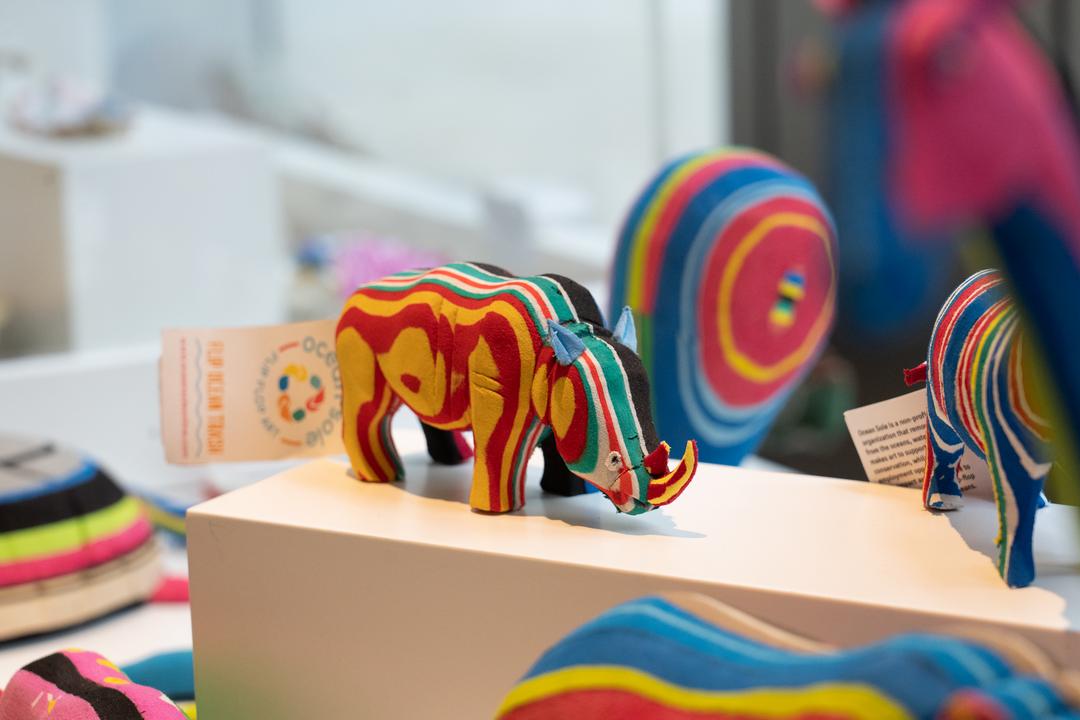
Flip‑flop art takes this troublesome waste stream and transforms it into something beautiful and meaningful. Instead of being discarded forever, the flip‑flops are collected, cleaned, and hand‑carved into colourful sculptures. The most well‑known creator of this art form is Ocean Sole, a social enterprise based in Nairobi, Kenya. Founded in 1999 by marine biologist Julie Church, Ocean Sole turns what was once pollution into vibrant works of art that are sold in galleries, museums, and gift shops around the world.

From shoreline to showroom. These four sculptures are proof that even the most ordinary waste can become something extraordinary.
How Are Flip‑Flops Turned into Art?
The journey of a flip‑flop from a polluted shoreline to a polished showroom is a detailed, multi‑step process that combines environmental action with skilled craftsmanship.
Step 1: Collection and Sorting:
The journey begins on the beaches and waterways of Kenya’s coastline. Local community members, including women’s groups, Ocean Sole Mamaz and the team, collect discarded flip‑flops. This creates an immediate economic incentive to clean the environment. The collected footwear is then transported to Ocean Sole’s workshop in Karen Village, Nairobi.
Step 2: Cleaning and Preparation
At the workshop, the flip‑flops are thoroughly washed, disinfected, and dried. They are then sorted by colour. Because Ocean Sole does not paint the sculptures (the colour comes directly from the original flip‑flops), this sorting stage is crucial for creating the bright, varied palettes the art is known for.
Step 3: Shaping and Assembly
For smaller sculptures, the cleaned flip‑flops are fed into a die‑cut machine that cuts out basic animal templates (like a rhino or elephant). These flat templates are then stacked and glued together using non‑toxic industrial adhesive to form a solid block of material.
Step 4: Carving and Sculpting
This is where the real artistry begins. A skilled artisan takes the solid block of stacked flip‑flops and, using a sharp knife, begins to carve the raw shape of the animal. They carefully work the material, revealing the form underneath. For life‑sized or extra‑large sculptures (like the famous Ocean Sole giraffes), the artisans first build a lightweight core using recycled styrofoam (polyurethane) collected from shipping containers. This core is then padded and covered entirely with a mosaic of colourful flip‑flop pieces, which are glued on by hand.
Step 5: Finishing and Sanding
Once the carving is complete, the sculpture is meticulously sanded to create a smooth, polished finish. Any final details, such as eyes or ears, are added. The piece is then washed, disinfected, and dried, ready for its final journey to a showroom, gallery, or someone’s home.
Remarkably, nothing is wasted. Even the small off‑cuts of rubber left over from the carving process are not thrown away. They are collected, shredded, and repurposed to make products like mattress toppers, dog beds, and floor mats.

Every sculpture passes through these hands. Sanding smooth the edges, shaping the final form this is where art meets patience.
What Tools Are Used to Create the Products?
The tools used by Ocean Sole artisans reflect a balance of efficiency and traditional handcraft. The main tools include:
Die‑Cut Machine: For smaller and medium‑sized pieces, this machine is used to cut standard animal templates (like a rhino or elephant) from the flat, cleaned flip‑flops.
Non‑Toxic Industrial Adhesive: A strong, specially formulated glue is used to bond the layers of flip‑flops together into solid blocks. Ocean Sole prioritises using non‑toxic adhesives to ensure a safe working environment for its artisans.
Carving Knives: The primary tool for shaping the art. Once the flip‑flop blocks are formed, the work becomes entirely manual. Artisans use sharp knives to carve, sculpt, and define the unique form of each animal.
Sanding Tools: After carving, the sculptures are sanded smooth to achieve a professional, polished finish ready for display.
For the largest installations, the process is a bit different. As Joe Mwakiremba, head of sales at Ocean Sole, explained: big animals are “stuffed on the inside with polyurethane,” a foam‑like material often used for cushioning in shipping. This forms the core, which is then padded on the outside using recycled flip‑flops.
Why Does Owning Reclaimed Art Matter for the Planet?
When you bring an Ocean Sole sculpture into your home, you are doing much more than adding a splash of colour to a shelf or coffee table. You are becoming part of a story that starts on a polluted beach in Kenya and ends with a cleaner ocean, a paid artisan, and a rescued sea turtle.
Every flip‑flop that becomes part of a giraffe, elephant, or dolphin is a flip‑flop that will never float in the ocean. It will never be swallowed by a sea turtle or tangled around a bird’s leg. It will never break down into microplastics that enter the food chain. By choosing reclaimed art, you are literally removing waste from the environment and giving it a permanent, beautiful purpose.
But the impact does not stop there. Your purchase supports fair‑trade employment for skilled Kenyan artisans. Men and women who once struggled to find steady work now earn a reliable income carving these sculptures. They send their children to school, pay for healthcare, and plan for the future. The art you display on your wall or desk is the reason they have a job they are proud of.
Owning reclaimed art also sends a quiet but powerful message to everyone who visits your home. It starts conversations. A guest might ask, “What is that made of?” And when you tell them it is made from discarded flip‑flops collected from the ocean, you are spreading awareness. You are showing that waste is not an endpoint it is a beginning.
In a world filled with disposable products and fast furniture, choosing something that is hand‑carved, upcycled, and full of meaning is an act of hope. It says that you believe in second chances for materials, for people, and for the planet.
So yes, owning reclaimed art matters. Not just because it looks beautiful, but because every piece carries the weight of a cleaner coastline, a dignified livelihood, and a healthier future for our oceans.
What Impact Does This Art Have on the Environment and Communities?
The impact of Ocean Sole’s work reaches far beyond the walls of their Nairobi workshop. It touches the beaches where flip‑flops are collected, the families who depend on steady income, and the people around the world who bring a piece of this art into their homes.
Environmental Impact: A Cleaner Coastline, One Flip‑Flop at a Time
Every sculpture Ocean Sole creates starts with a cleanup. Teams of local collectors walk Kenya’s shores, gathering discarded flip‑flops that would otherwise drift in the ocean or bury themselves in the sand. By removing this waste, Ocean Sole helps protect marine life. Sea turtles, fish, and birds no longer have to swim through or accidentally eat plastic that takes decades to break down.
The process does not stop at collection. By turning waste into art, Ocean Sole keeps those flip‑flops out of landfills and waterways forever. The materials are given a new, permanent purpose. And because the art is built to last, the positive impact continues for years every time someone looks at a colourful giraffe or a playful dolphin, they are reminded that waste can become wonder.
Ocean Sole also runs educational programmes and beach clean‑up events. These activities teach local children and adults why plastic pollution matters and what they can do about it. The result is not just a cleaner shoreline today, but a community that understands how to keep it clean tomorrow.

Not every part of the work is glamorous. But gathering around a pile of beach waste, separating what can be upcycled, is how real change happens.
Community Impact: Dignity, Skills, and a Brighter Future
Behind every sculpture is an artisan. Ocean Sole employs dozens of skilled men and women who carve, sand, and assemble each piece by hand. These jobs are fair‑trade. Artisans earn stable wages, work in safe conditions, and receive training that builds their craft.
The benefits also flow to the wider community. Local collectors are paid for every bag of flip‑flops they bring in. Women’s groups, like the Ocean Mamaz in Kilifi, have turned waste collection into a source of income that supports their households while restoring the coastline. These are not charity projects. They are working, sustainable systems that put value back into the hands of the people who need it most.
In this way, every colourful giraffe or playful sea turtle sold in a showroom is not just a piece of art. It is a testament to a cleaner ocean, a thriving community, and the beautiful, hopeful things that can happen when we reimagine waste.
Support the journey.
Your purchase helps remove waste from Kenya’s coastlines, provides fair‑trade employment, and turns pollution into purpose.
See the Collection and Make an Impact →