Table of Contents:
- What is the goal for Sustainable development?
- What are the 5 C's of sustainability?
- What impact does sustainability have on the environment?
- What is an example of a sustainability statement in action?
- Making Your Values Visible: The Ocean Sole Model
What is the Goal of Sustainable Development?
At its core, sustainable development seeks to meet present needs without compromising future generations' ability to meet theirs. This isn't just about reducing harm, it's about creating regenerative systems that give back more than they take.
The United Nations' 17 Sustainable Development Goals (SDGs) provide the framework, but the real magic happens in localized, human-scale implementation. For social enterprises like Ocean Sole, this means addressing multiple SDGs simultaneously through creative circular economy solutions:
-
SDG 12 (Responsible Consumption): Transforming flip-flop waste into art
-
SDG 14 (Life Below Water): Cleaning marine ecosystems through beach cleanups
-
SDG 8 (Decent Work): Providing fair-trade employment for artisans
-
SDG 13 (Climate Action): Reducing plastic pollution's environmental impact
What Are the 5 C's of Sustainability?
An effective sustainability framework moves beyond the traditional "3 R's" (Reduce, Reuse, Recycle) to embrace what we call the 5 C's of Modern Sustainability:
-
Circularity: Designing systems where materials flow continuously rather than reaching dead ends. Ocean Sole exemplifies this through Flip-flops are collected from beaches → cleaned and upcycled into art → sales fund more cleanups and artisan livelihoods → more beaches are cleared. This intentional cycle ensures materials never become trash again
-
Community: Ensuring solutions uplift people, not just protect places. Leading to Kenyan artisans gain stable livelihoods through fair-trade creative work. Ocean Sole is turning waste into economic opportunity and becoming fierce guardians of their own coastal environment.
-
Creativity: Solving environmental challenges with innovation rather than restriction. By innovating the process of hand-carving discarded plastic into vibrant sculptures, we prove that sustainability can be joyful, beautiful, and inspirational. This creative approach engages hearts and minds far more effectively than fear, making environmental care accessible and desirable.
-
Connection:A key to driving change is making impact visible. Each sculpture is a tangible story. When you own a giraffe or turtle from us, you’re not just buying decor; you’re directly linked to cleaner Kenyan beaches, funded cleanups, and the specific marine life those cleanups protect. You become part of the cycle.
-
Consciousness: Awareness is the first step, but Consciousness is about turning that awareness into sustained action. Through educational workshops and transparent storytelling, we deepen understanding of the plastic crisis and the power of upcycling. We move people from passive concern to engaged participation, empowering them to make better choices and advocate for change in their own circles.
What Impact Does Sustainability Have on the Environment?
When sustainability moves from theory to practice, the environmental impact becomes measurable and meaningful. Consider plastic pollution: according to UNEP, humanity produces 430 million tons of plastic annually, with devastating consequences for ecosystems.
Sustainable interventions like Ocean Sole's marine plastic upcycling create ripple effects:
-
Direct Impact: Each sculpture prevents 500-1,000 flip-flops from entering oceans
-
Systemic Change: Creating market demand for upcycled materials shifts production paradigms
-
Educational Value: Recycled plastic sculptures become conversation starters about consumption

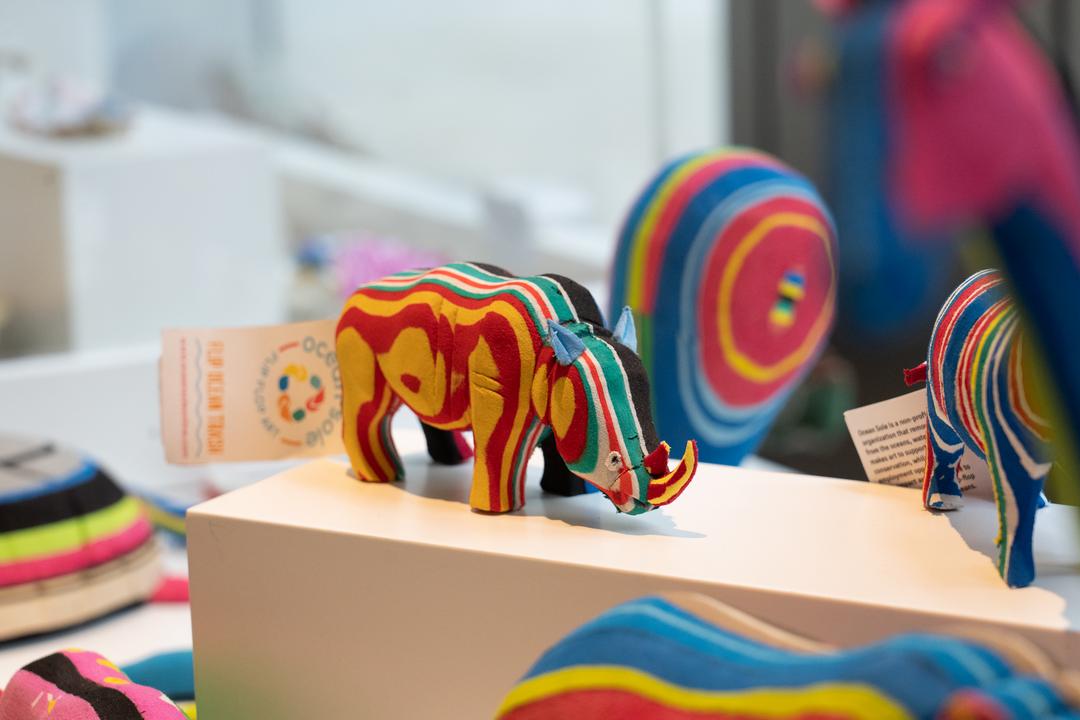
Upcycled art installation demonstrating sustainable values through Ocean Sole's recycled flip-flop sculpture
What is an Example of a Sustainability Statement in Action?
A sustainability statement becomes powerful when it's visible, verifiable, and valuable. Ocean Sole's entire operation serves as a living sustainability statement:
Their Visual Statement: "We transform beach pollution into beautiful art that funds conservation and community development."
How It Manifests:
-
Material Transparency: Every sculpture lists its origin (recycled flip-flops from Kenyan beaches)
-
Impact Tracking: Sales directly fund beach cleanups and artisan livelihoods
-
Story Integration: Each piece comes with the story of its making and environmental impact
This approach turns sustainable gifts and ethical office décor into ongoing conversations about circular economy principles, proving that sustainability statements work best when they're embedded in beautiful, functional objects rather than PDF reports.
Making Your Values Visible: The Ocean Sole Model
Ocean Sole offers organizations a unique pathway to turn sustainability values into compelling visual statements:
Custom Art Commissions: Collaborate with organizations to create recycled flip-flop art pieces that reflect your brand's specific environmental and social priorities.
Interactive Installations: Create engaging spaces where employees and visitors can contribute to or learn about upcycling processes.
Impact Partnerships: Align with a verified social enterprise that delivers measurable environmental and community outcomes.
Educational Programming: Host workshops that transform team building into consciousness raising about circular economy Africa innovations.

Diverse team engaging in hands-on upcycling workshop with Ocean Sole, turning sustainability values into team building and creative action
Continue the journey with us. Support our mission. --> Visit our website.